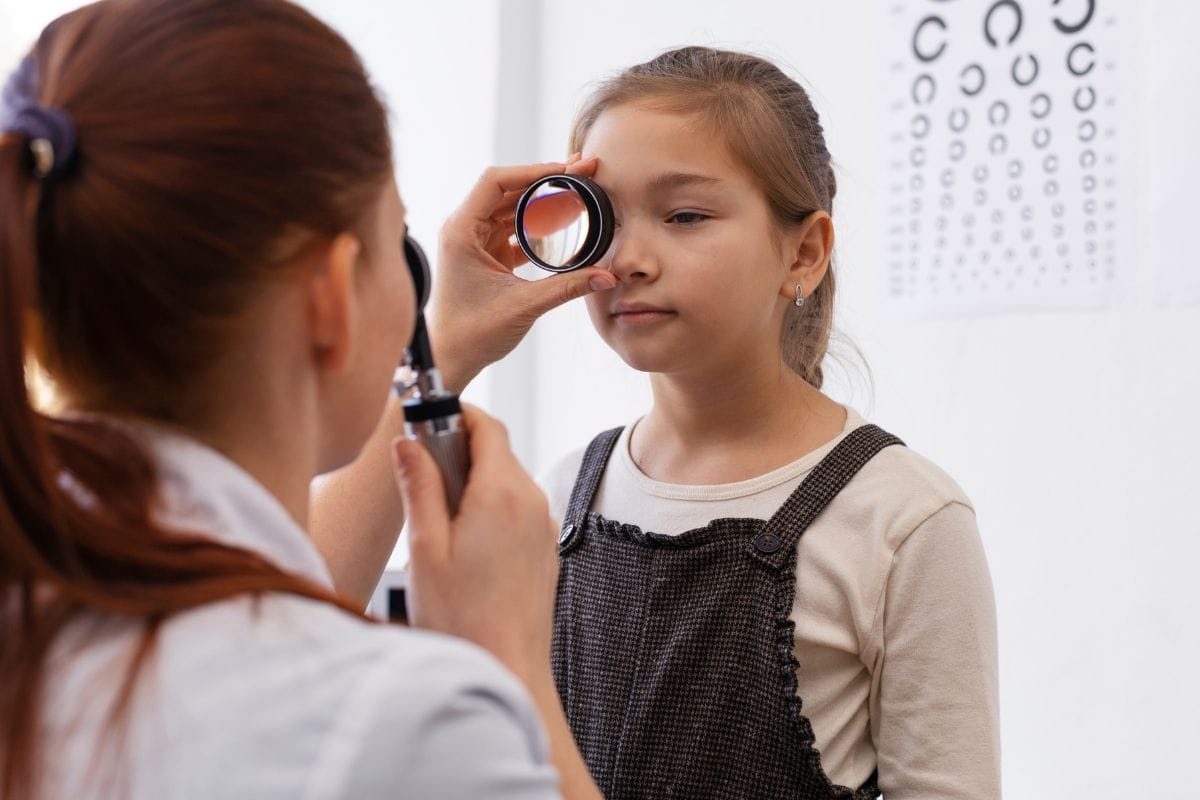
Eye Health in Children
Approximately 80% of children's learning about the world occurs through the sense of sight. School success, physical development and social adaptation directly depend on healthy vision. Therefore, eye health in children is not just a medical check-up, but an investment in the child's future. However, children often fail to recognize or express vision problems; They may think blurry vision is "normal". Careful observation by parents and regular examinations play a critical role in preventing permanent damage.
When to Visit a Pediatric Ophthalmologist?
Waiting until children start school for an eye examination is one of the biggest mistakes made. Ideal routine checks; It should be done immediately after birth, in the first 6 months, around the age of 3 and just before starting school. Examinations performed during these periods are vital in increasing visual acuity and correcting potential refractive errors without affecting school success.
The Importance of Early Diagnosis
Problems detected early increase treatment success to over 90%. Beyond standard reading tests, an ophthalmologist can detect the back structure of the eye and hidden numbers with eyedropper examination.
How to Understand Eye Distortion in Children?
Strabismus in children is a condition in which both eyes cannot focus on the same point at the same time. It occurs when one eye looks straight while the other looks inward, outward, upward or downward. This condition is not just an aesthetic problem, it is a serious vision defect that can lead to loss of depth perception and amblyopia (amblyopia) if left untreated. Treatment plan; It may include the use of glasses, occlusion therapy, or surgery. Eye strain may sometimes be constant, or it may sometimes occur when the child is tired or sick.
Strabismus Symptoms and Types
- Introversion (Esotropia) — It is usually seen in infancy and early childhood.
- Outward Shift (Exotropia) — It is more noticeable occasionally, during moments of distraction.
What are the Symptoms of Eye Redness and Infection in Children?
Eye redness in children usually occurs when the vessels in the white part of the eye expand as a result of microbial infections (conjunctivitis) or allergic reactions. If redness is accompanied by yellow-green flaking, excessive watering and sticking of eyelashes, this is a sign of eye infection. Since viral infections are highly contagious, hygiene rules should be observed and a doctor should be consulted without delay.
Differentiation between Infection and Allergy
- Bacterial Infection — There is intense burr and sticky discharge. Antibiotic drop treatment may be required.
- Allergic Infection — It is accompanied by intense itching, watery discharge and sneezing. It is common during seasonal transitions.
What Causes Under-Eye Dark Circles in Children?
Contrary to popular belief, dark circles under the eyes in children, which is one of the aesthetic problems that worry parents the most, is not usually caused by insomnia. The most common causes are genetic predisposition and allergic rhinitis (hay fever). Nasal congestion causes blood to pool in the vessels around the eyes, making the skin appear darker. Additionally, iron deficiency anemia and insufficient fluid consumption are factors that make bruises more pronounced.
Treatment Approach to Dark Circles Under Eyes
- Blood Test — Complete blood count and iron and vitamin levels should be checked.
- Allergy Inquiry — The child's allergy history should be questioned.
- Nasal Congestion — If there is nasal congestion, it should be treated.
Symptoms Affecting School Success
Children show that they cannot see the board not by saying "I can't see" but by their behavior. The following symptoms may indicate a vision defect. When these symptoms are noticed, a detailed eye examination must be performed before a diagnosis of "attention deficit" is made.
- Close Watch — The desire to watch television very closely.
- Getting bored easily — Don't get bored easily while reading a book or doing homework.
- Eye Rubbing / Blinking — Constant rubbing of your eyes and frequent blinking.
- Headache — Coming home from school complaining of a headache.
- Line Skip — Do not skip lines or follow with your fingers while reading.
Frequently Asked Questions
Ideal controls; It should be done immediately after birth, in the first 6 months, around the age of 3 and before starting school. Waiting for him to start school could be a big mistake.
Yes. Strabismus can be largely corrected with the use of glasses, occlusion therapy or surgical intervention. Early diagnosis significantly increases treatment success.
Amblyopia is a condition in which vision is impaired as a result of inadequate use of one eye. If left untreated, it can lead to permanent vision loss; It can be largely corrected with early closure treatment.
If redness is accompanied by yellow-green burrs, excessive watering or sensitivity to light, an ophthalmologist should be consulted without delay. Viral conjunctivitis is highly contagious.
Behaviors such as sitting close to the television, frequent blinking, headaches, getting bored easily with homework, and skipping lines may be signs of vision problems. In case of these symptoms, a detailed eye examination should be performed.