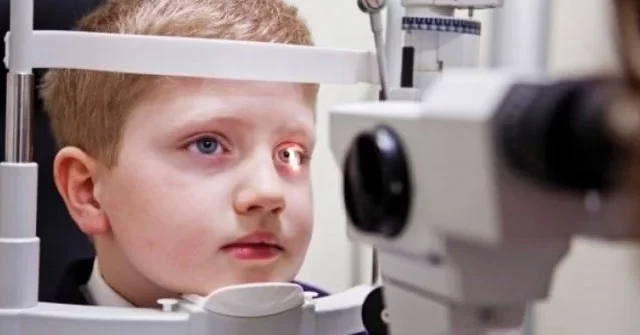
Eyes are one of the most complex and vital organs of the human body. Thanks to the sense of sight, we perceive our environment, communicate and improve our quality of life. This important organ may be exposed to many diseases depending on various internal and external factors. Protecting eye health is possible with early diagnosis and correct treatment. In this article, the importance of eye health, common eye diseases and treatment methods are discussed.
The Importance of Eye Health
The human brain obtains approximately 80% of the information it receives from the eyes. Therefore, protecting vision is very important for both individual quality of life and being able to take an active role in social and professional life. Disorders occurring in the eyes; It can cause headaches, lack of concentration, fatigue, and even psychological problems. Regular eye examinations, a conscious lifestyle and early treatment are the cornerstones of a healthy visual system.
Common Eye Diseases
Refraction Defects (Refraction Errors)
These problems, which occur as a result of the eye not refracting light correctly, are among the most common eye disorders.
- Myopia (Nearsightedness) — Distant objects appear blurry.
- Hypermetropia (Near Sightedness) — Nearby objects cannot be seen clearly.
- astigmatism — Both near and distant images may be blurry and distorted.
Treatment: It can be corrected with the use of glasses or contact lenses. Refractive surgery (laser surgeries) can also offer a permanent solution.
Cataract
It is the clouding of the eye lens by losing its transparency. It usually develops with age; Congenital or traumatic cataracts may also be seen. Symptoms: blurred vision, faded colors, poor night vision. Its treatment is surgery; The cloudy lens is removed and an artificial lens is placed in its place.
Glaucoma (Eye Pressure)
It is a disease that damages the optic nerve as a result of increased intraocular pressure. It is called the "silent thief" because it may not cause symptoms in the early stages. Symptoms: eye pain, headache, narrowing of the field of vision. Treatment: pressure can be controlled with eye drops; In advanced cases, laser treatment or surgical intervention may be required.
Macular Degeneration (Macular Degeneration)
It is especially common in individuals over the age of 50. Central vision loss occurs as a result of the deterioration of the macula area. Symptoms: blurriness in the visual center, lines appearing crooked, impaired color perception. Depending on the type of disease, drug injections, laser treatment or nutritional support may be applied; There is no completely curative treatment, but progression can be slowed.
Conjunctivitis (Eye Inflammation)
It is inflammation of the outer layer of the eye. It may occur due to viral, bacterial or allergic reasons. Symptoms: redness, itching, crusting, watering. Treatment: Depending on the cause, antibiotic drops, antihistamines or cortisone drugs can be used.
Dry Eye (Dry Eye Syndrome)
It occurs when tear production decreases or their quality deteriorates. It is common in people who spend a long time in front of the screen. Symptoms: burning, stinging, feeling of sand, sensitivity to light. It can be controlled with artificial tear drops, tear duct plugs and environmental measures.
Strabismus
It is a condition where the eyes are not parallel. While one eye looks straight, the other may shift to the right, left, up or down. It is common in childhood. It can be corrected with glasses, occlusion therapy, prismatic lenses or surgical methods.
Recommendations to Protect Eye Health
- Regular Eye Examination — It is important to see an ophthalmologist every 6 months or once a year for early diagnosis of possible diseases.
- Balanced diet — Foods rich in vitamin A, omega-3 fatty acids and lutein contribute to eye health.
- Limiting Screen Time — The 20-20-20 rule is recommended: every 20 minutes, look 20 feet away for 20 seconds.
- Protection from UV Rays — Wearing sunglasses protects the eyes against harmful UV rays.
- Not Smoking — Smoking increases the risk of cataracts and macular degeneration.
- Pay Attention to Eye Hygiene — Hands should be washed frequently and eyes should not be touched with dirty hands.
Modern Eye Health Technologies
Technological developments in the field of eye health have provided revolutionary advances in both diagnosis and treatment processes. Many eye diseases are diagnosed at an earlier stage, and treatments are becoming more comfortable, sensitive and personalized.
Laser Surgeries
- Excimer Laser (LASIK, PRK) — It is used in the treatment of refractive errors such as myopia, hyperopia and astigmatism. Clear vision is provided by reshaping the corneal surface.
- Photocoagulation Laser — It is used in retinal diseases such as retinal tears, diabetic retinopathy and age-related macular degeneration. It seals leaky veins or fixes damaged areas.
- YAG Laser — It clears the capsule opacification (secondary cataract) that occurs after cataract surgery. It is a painless and fast procedure.
Intraocular Drug Injections (Intravitreal Injections)
- Anti-VEGF Drugs — It prevents abnormal vascular formation and fluid leakage in macular degeneration, diabetic macular edema and retinal vascular occlusions. Aflibercept, Ranibizumab and Bevacizumab are the most commonly used.
- Steroid Injections — It is used in inflammatory eye diseases. It provides a long-lasting effect but may increase intraocular pressure in some patients.
Smart Lenses (Multifocal and Trifocal Intraocular Lenses)
- Multifocal Lenses — It allows you to see clearly from far and near distances at the same time; It greatly reduces glasses addiction.
- Trifocal Lenses — Sees far, medium and near distance clearly. It provides an advantage especially in medium distance use such as a computer screen.
- Toric Lenses — It was specially developed for astigmatism patients; It provides both cataract treatment and elimination of refractive errors.
Advanced Imaging Techniques
- OCT (Optical Coherence Tomography) — It provides a cross-sectional image of sensitive structures such as the retina, nerve fiber layer and macula. Thanks to micron-level details, diseases are detected early.
- FFA (Fundus Fluorescein Angiography) — The circulation of retinal vessels is visualized with a special dye. It is used in diabetic retinopathy and wet macular degeneration.
- ICG Angiography — It is used to view the deeper vascular structures of the eye.
Minimally Invasive Glaucoma Surgery (MIGS)
These modern surgical methods used in patients with eye tension (glaucoma) provide less tissue damage and faster recovery compared to classical glaucoma surgeries. Pressure is reduced by increasing intraocular fluid drainage with small implants or micro stents.
Frequently Asked Questions
In general, eye examinations are recommended every 6 months or once a year. More frequent checks may be required if there are risk factors such as diabetes, hypertension or family history.
Glaucoma may not cause symptoms in the early stages. That's why it's called the "silent thief". Early diagnosis can be made by evaluating intraocular pressure and optic nerve through regular eye examination.
The only treatment for cataracts is surgery. However, the timing of surgery is determined by the level of negative impact on the patient's quality of life; Not every cataract requires immediate surgery.
Laser surgeries such as LASIK provide permanent results in most patients. However, suitability depends on eye structure; It should be evaluated by detailed examination.
Yes. Foods containing vitamin A, omega-3 fatty acids, lutein and zeaxanthin (fish, carrots, green leafy vegetables) protect eye health and may reduce the risk of cataracts and macular degeneration.