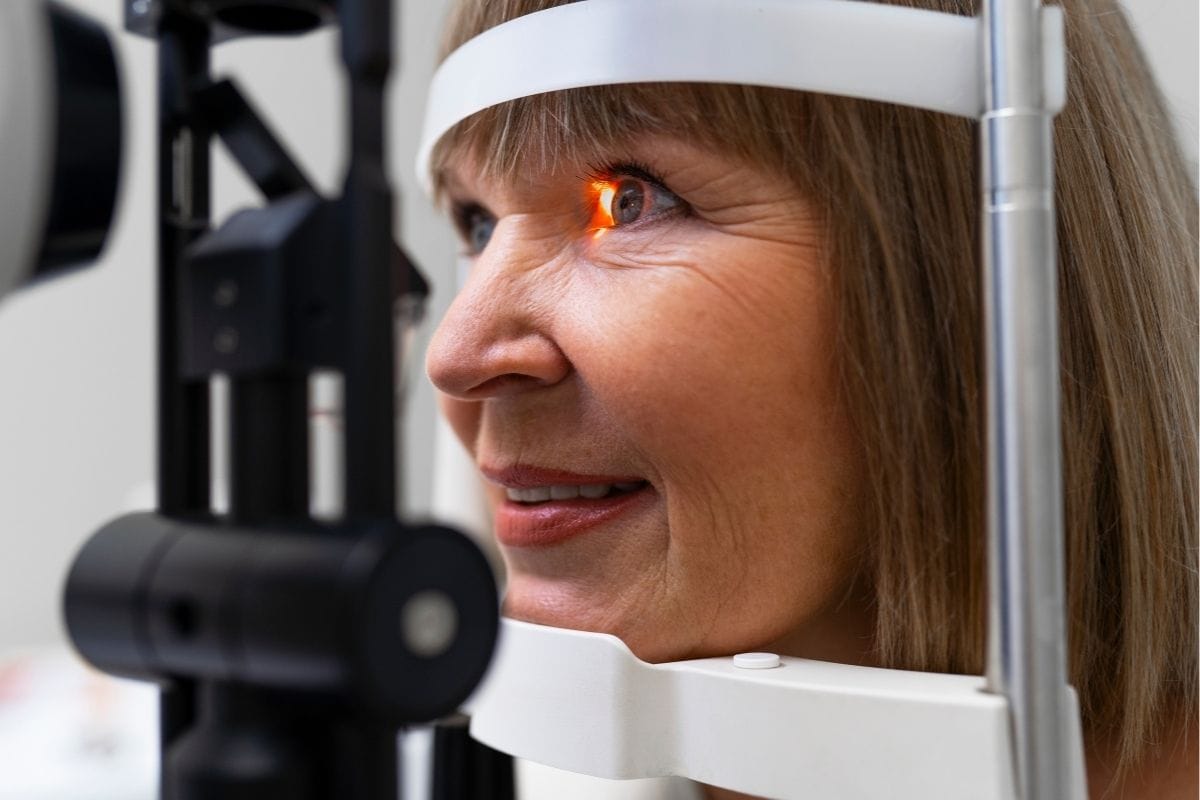
FFA (Fundus Fluorescein Angiography) is a special imaging test performed to examine the retinal vessels located at the back of the eye in detail. Thanks to the fluorescein dye administered through the arm, the blood circulation in the retinal vessels becomes visible.
Why is eye angiography performed?
- Diabetic retinopathy (retinal damage due to diabetes)
- Yellow spot (macula) diseases
- Retinal vascular occlusions
- Retinal edema and suspicion of leakage
- When the cause of vision loss cannot be determined
- In choroidal vascular diseases or retinal tumors
How is Eye Angiography Done?
The patient sits in front of the special FFA camera. First, unstained retina photographs are taken. Fluorescein dye is then injected into the arm vein. After the dye is administered, the progress of the retinal vessels is recorded second by second: arterial phase in 0-10 seconds, venous filling phase in 10-30 seconds, full filling and possible leaks in 1-3 minutes. Total processing time is usually 10-15 minutes.
Things to Consider After the Procedure
- Fluorescein dye is eliminated from the body through the kidneys; urine color may be bright yellow for 24 hours
- Slight temporary yellowing of the skin may occur
- Since the pupils will remain dilated for a while, vehicles should not be used after the procedure.
- Most patients return to normal vision within a few hours
Benefits of FFA Testing
- Detects blockages and leaks in retinal vessels
- Helps determine the cause of vision loss
- Guides treatment planning such as laser or injection
- Provides the opportunity to monitor the progression of the disease
Frequently Asked Questions
Is eye angiography painful?
When the dye is administered into the vein, there may be a slight warm feeling and a metallic taste in the mouth in some people; This will pass soon. There is no pain or stinging sensation during the procedure.
Is there an allergy risk for FFA?
Although rare, allergic reactions may occur to fluorescein dye. Before the procedure, allergy history is questioned and precautions are taken if necessary.
Can the vehicle be used after FFA?
No. Since the pupils are dilated, blurred vision may occur after the procedure. Driving should be avoided for several hours.