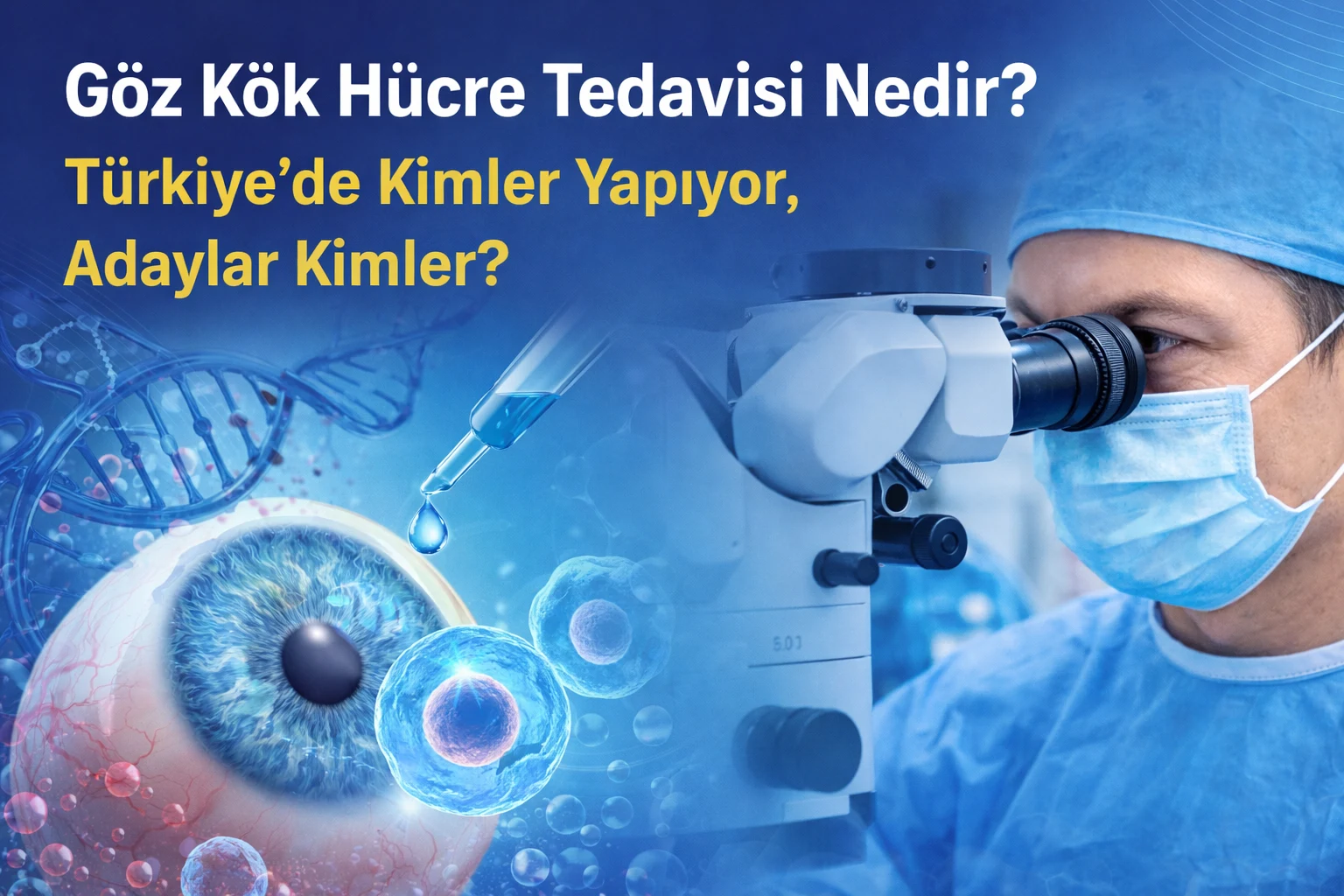
stem cell therapy son yıllarda tıbbın birçok alanında çığır açan bir yaklaşım olarak öne çıkmaktadır. Göz hastalıkları söz konusu olduğunda ise bu tedavi özellikle kornea yetmezliklerinde umut verici sonuçlar doğurmaktadır. Peki göz kök hücre tedavisi tam olarak ne anlama gelir?
The cornea, the transparent tissue covering the front of the eye, can renew itself thanks to stem cells in the region called limbus. When these stem cells are damaged or their numbers fall below a critical threshold, the corneal surface deteriorates; Vision quality decreases and vision loss may develop over time. At this point, limbal stem cell transplantation (LCCT) comes into play.
In which diagnoses is it applied?
Eye stem cell therapy may be especially considered in the following situations:
- Limbal stem cell failure (primary or secondary)
- Corneal damage following chemical or thermal burns
- Autoimmune conditions such as Stevens-Johnson syndrome and ocular cicatricial pemphigoid
- Recurrent corneal erosions and aniridia-related corneal involvement
- Chronic corneal damage caused by contact lenses
When patients with these diagnoses cannot achieve adequate recovery with standard drug treatment or conventional corneal transplantation, the stem cell option may come to the fore.
What is the difference from standard cornea transplantation?
Standard penetrating keratoplasty (full corneal transplant) requires donor tissue; It has limitations such as risk of rejection and long recovery period. In limbal stem cell transplantation, donor corneal stem cells or cells taken from the patient's healthy eye can be used. This approach offers a more targeted and less invasive intervention, especially in surface-related problems.
It is worth noting that both methods are not mutually exclusive. In some cases, after stem cell transplantation is successfully performed, corneal transplantation becomes possible under more favorable conditions.
Who Can Apply This Treatment in Türkiye?
Limbal stem cell transplantation is a procedure that requires advanced surgical experience and special infrastructure. In Türkiye, competent centers in this field are quite limited; Many clinicians avoid this procedure due to the risk of complications.
Birinci Göz Hastanesi’nde Doç. Dr. Ökkeş Baz, göz kök hücre tedavisi alanında aktif olarak uygulama gerçekleştiren uzmanlar arasındadır. Kornea cerrahisi ve yüzey hastalıkları konusundaki derin deneyimiyle Assoc. Dr. Base, özellikle standart tedavilere yanıt vermeyen karmaşık vakalarda umut kapısı olmaktadır.
How Does the Treatment Process Work?
The process begins with a detailed preliminary assessment. Various advanced diagnostic tests are performed to determine corneal topography, anterior segment imaging, and the degree of stem cell failure. An individual surgical plan is prepared for patients who are determined to be suitable candidates.
Regular follow-up appointments are of great importance in the postoperative period. Although the adaptation process varies from person to person, significant improvement in vision quality is reported in successful cases.
Who are the candidates?
If you have been struggling with a corneal-related vision problem for a long time, if standard treatments have been inadequate, or if you are on the corneal transplant waiting list, it may be evaluated whether eye stem cell treatment is suitable for you. The final decision can only be made by expert examination; Therefore, do not hesitate to take the first step to find out your own situation.
Frequently Asked Questions
Can eye stem cell treatment be applied to every patient?
No. Suitability is determined only after detailed corneal evaluation. Patients diagnosed with stem cell failure who do not respond to standard treatments are candidates.
How is it different from corneal transplantation?
Limbal stem cell transplantation offers more targeted intervention for surface-borne problems; It does not require a whole donor cornea. In some cases, the two methods can complement each other.
Who does this treatment in Türkiye?
Assoc. Prof. at First Eye Hospital. Dr. Ökkeş Baz is among the experts who actively practice in this field.