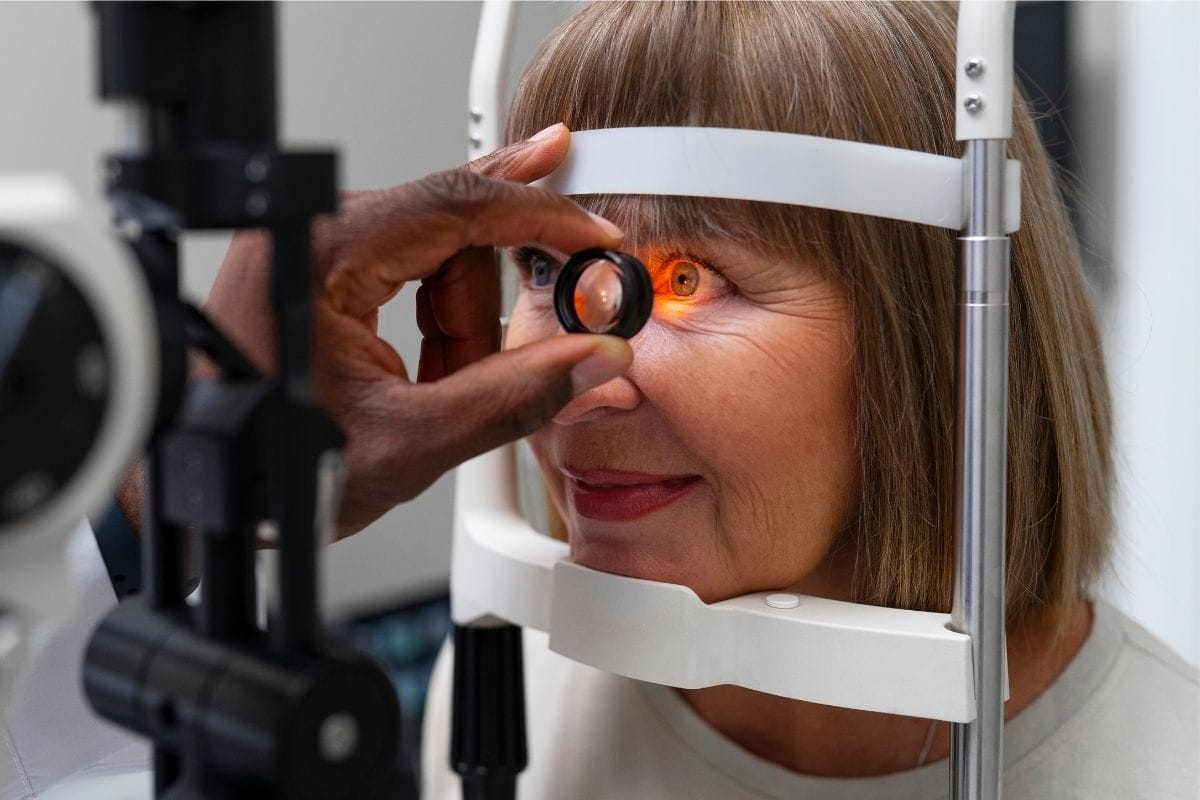
Retinal tear is a serious eye health problem that requires urgent intervention. If not treated in time, it can lead to permanent vision loss.
What is Retinal Tear?
It is a physical puncture or crack that occurs in the nerve layer covering the inner back wall of the eye. Over time, the vitreous fluid loses its structure and shrinks, and if it pulls off at a point while leaving the retina, a tear occurs.
What are the symptoms of Retinal Tear?
- Flashes of Light (Lightning): Seeing flashes at the edges even when your eyes are closed
- Sudden Increase in Floaters: Increased number of filaments, cobwebs, or blackheads
- Curtain Fall: A gray/black curtain begins to block vision from anywhere in the visual field.
- Blurred Vision: Sudden decrease in visual acuity
What Causes Retinal Tear?
The most common cause is that the vitreous gel shrinks and pulls on the retina. In people with high myopia, the eyeball is longer and the retina is tighter and thinner. Risk group: high myopes, individuals over 40-50 years of age, those who have undergone cataract surgery, those who have experienced eye trauma, those with a family history of retinal detachment.
Treatment of Retinal Tear
Those diagnosed early are treated with Argon Laser Photocoagulation or Cryotherapy (freezing) under outpatient clinic conditions. If retinal detachment has developed, Vitrectomy surgery is required.
Frequently Asked Questions
Does a retinal tear heal on its own?
No. If the tears do not heal on their own and are left untreated, they can turn into a retinal detachment.
Is retina laser painful?
No. Argon laser procedure is performed with numbing drops, is painless and the patient can return home on the same day.
Can someone with a retinal tear do sports?
In the first period after laser treatment, heavy sports and activities with risk of impact should be avoided. Your doctor's recommendations should be followed.