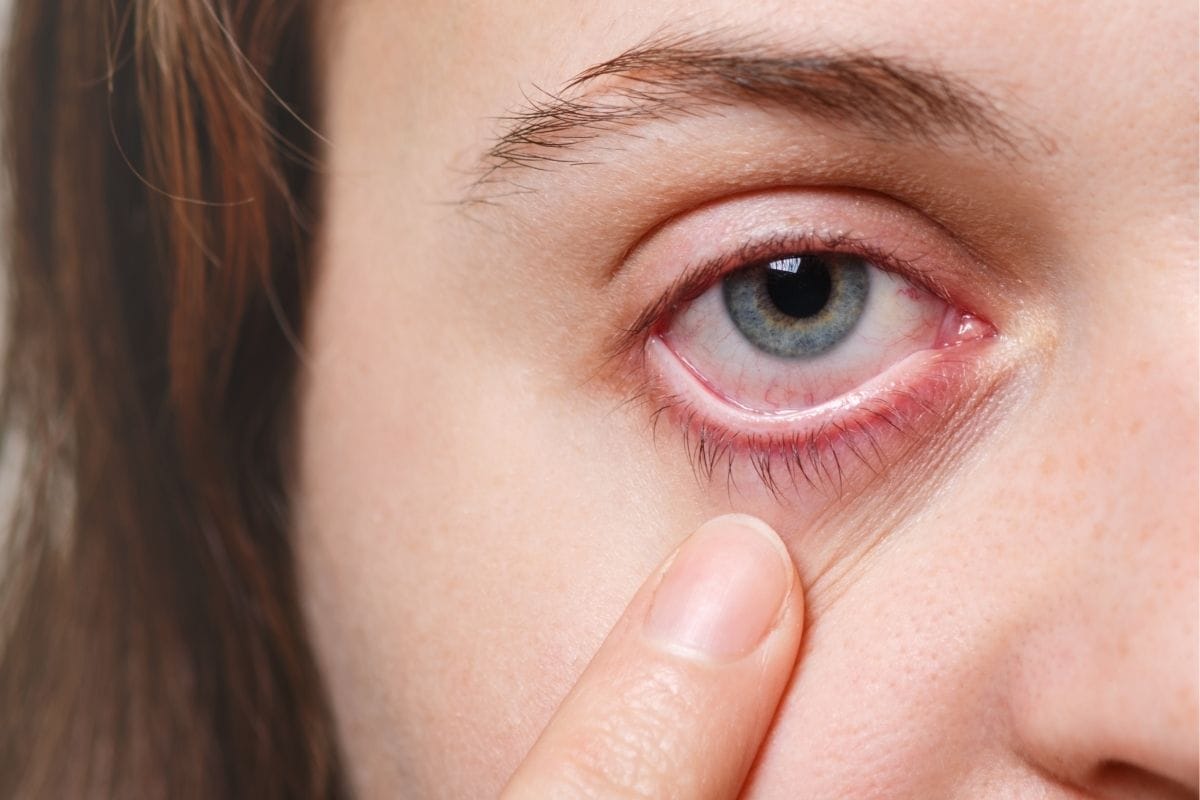
It may seem alarming to notice that the whites of your eyes are red. Although it is often associated with simple reasons such as insomnia or fatigue, the underlying causes can sometimes be more complex.
What Causes Bloodshot Eyes?
The most common causes: allergic reactions, dry eye syndrome, looking at digital screens for long periods of time, insomnia, conjunctivitis, contact lens use, and environmental irritants such as cigarette smoke.
What Causes Bloodshot Eyes in One Eye?
The most common cause of unilateral bleeding is a local trauma or infection specific to that eye. Subconjunctival hemorrhage (rupture of a small blood vessel in the eye) appears as a bright red spot in one eye. Even vigorous coughing, sneezing, or heavy lifting can cause the vein to rupture. It is usually painless and resolves spontaneously.
How to Treat Bloodshot Eyes?
If there is dryness, artificial tear drops are used, if there is an allergy, antihistamines are used, and if there is an infection, antibiotic drops are used. If you wear contact lenses, taking a break for a while will speed up healing.
What can be done at home for bloodshot eyes?
- Cold Compress: Constricts the vessels in allergic rashes
- Warm Compress: If there is a stye or eyelash infection, it opens the oil channels.
- 20-20-20 Rule: Every 20 minutes, look 20 feet away for 20 seconds
- Sleep Pattern: 7-8 hours of sleep a day is necessary for eye repair.
- Hydration: Drinking plenty of water supports tear production
When to See a Doctor?
- Sudden loss of vision or blurred vision
- Hypersensitivity to light
- severe eye pain
- Thick green or yellow discharge from the eye
- Post-traumatic bleeding
Frequently Asked Questions
How long does it usually take for bloodshot eyes to go away?
Bleeding caused by insomnia or digital fatigue will disappear in a few days. Subconjunctival hemorrhage resolves spontaneously within 1-2 weeks.
Could bloodshot eyes be a sign of a serious illness?
Yes. Sudden loss of vision, severe pain, or bleeding accompanied by sensitivity to light may be a sign of serious conditions such as glaucoma or uveitis.