Eye tumors are masses that form as a result of abnormal cell growth in the eye or surrounding tissues. These masses can be benign or malignant, that is, cancerous. Early diagnosis is vital for preserving vision and general health.
What is an Eye Tumor?
Eye tumor is the general name for masses that form as a result of uncontrolled cell division in the layers that make up the eye, in the eyelid or in the eye socket. These tumors may arise from the eye's own tissue (primary) or may occur when cancer from another part of the body spreads to the eye (metastatic). While the most common type of intraocular cancer in adults is uveal melanoma, retinoblastoma comes to the fore in children.
Not every mass detected in the eye means cancer. Benign tumors usually do not spread to other tissues and may only require follow-up. However, malignant formations carry the risk of both damaging the eye tissue and spreading to other parts of the body.
What are the symptoms of eye tumor?
Symptoms of an eye tumor vary depending on the location and size of the mass. The most common complaints include blurred vision, floaters in the field of vision, flashes of light, and pupil shape distortions.
- Unexplained decrease in visual acuity
- Pupil deformity: Tumors on the iris can distort the round structure of the pupil
- Dark spots growing on the white or colored part of the eye
- The eye bulges forward (exophthalmia): Large masses behind the eye can push the eyeball, causing it to appear protruding.
- Flashes of light: A sudden sensation of lightning as a result of damage to the retina.
Is There a Treatment for Eye Tumor?
Yes, eye tumor treatment is possible thanks to today's modern medical technologies. The primary goals of treatment are to save the patient's life, keep the eye in place, and, if possible, preserve vision. In cases diagnosed early, the chance of preserving both the eye and vision is quite high.
Eye Tumor Surgery and Other Methods
Radiotherapy methods include plaque brachytherapy (radioactive material temporarily placed on the surface of the eye), proton beam therapy, and stereotactic radiosurgery (CyberKnife/Gamma Knife). Surgical interventions are performed in the form of resection (local removal of the tumor) and enucleation (complete removal of the eye in cases where the tumor is very large).
How to Diagnose Eye Tumor?
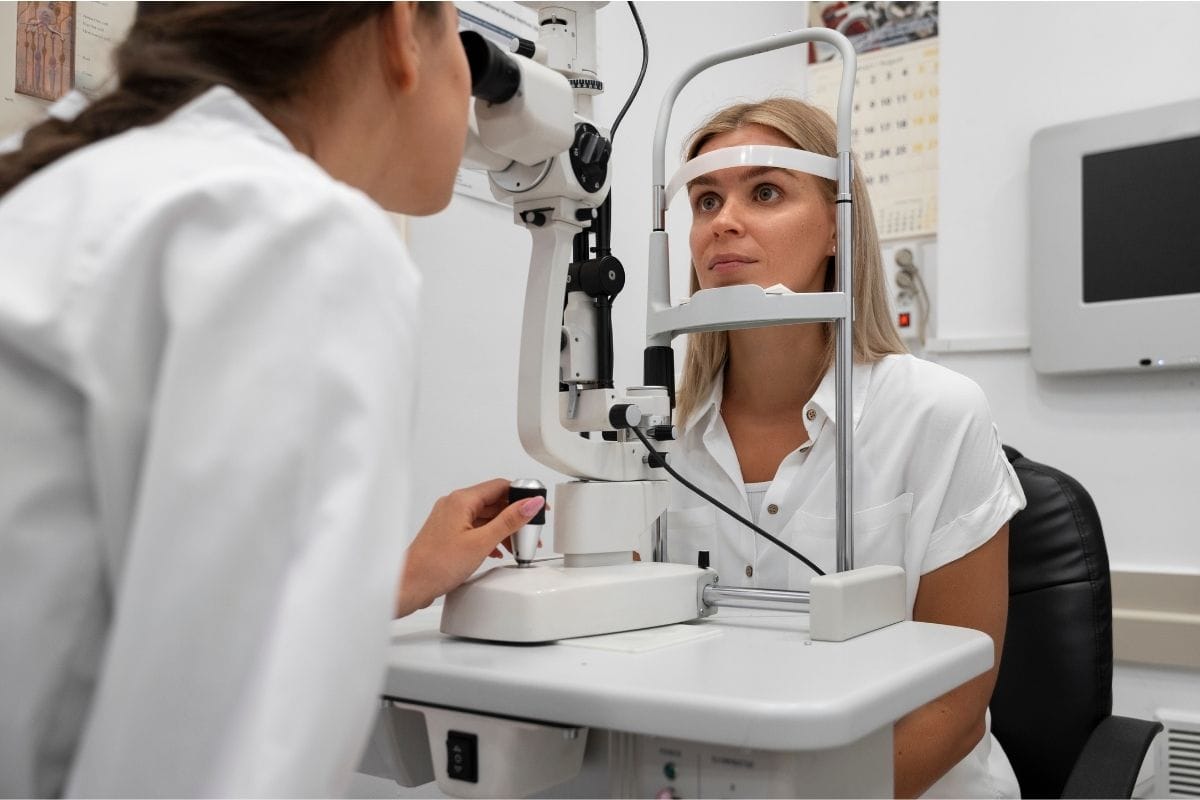
The diagnosis of eye tumor is made by a combination of detailed biomicroscopic examination by a specialist ophthalmologist and auxiliary imaging methods. Generally, the type and structure of the tumor can be detected with an accuracy of over 95% only with advanced imaging devices, without the need for a biopsy.
- Eye Ultrasonography: The most basic tool in determining the internal structure, height and shape of the tumor.
- OCT (Optical Coherence Tomography): Examines the layers of the retina in detail
- Eye Angiography (FFA/ICG): Reveals the nutrition pattern of the tumor by examining the vascular structure
- MRI and CT: Checks whether the tumor has spread outside the eye or to the brain
Risk Factors and Prevention Ways
The most obvious risk factors include having fair skin and colored eyes, long-term unprotected sun exposure, and genetic predisposition. Especially those with blue or green eye color, those with very light skin tone, and those with a family history of eye cancer should not skip their regular check-ups.
Frequently Asked Questions
Is an eye tumor always cancer?
No. Not every mass detected in the eye is cancer. Benign tumors may only require follow-up. A specialist examination is essential for a definitive evaluation.
How is eye tumor diagnosed?
Diagnosis can usually be made without the need for biopsy with imaging methods such as biomicroscopic examination, eye ultrasonography, OCT and angiography.
Can the eye be lost when there is a tumor in the eye?
In cases diagnosed early, the chance of preserving the eye and vision is very high. Organ-preserving methods such as radiotherapy and laser are primarily preferred.